· Updated
Spa road trip: Sintra, Cascais & Arrábida hills
Drive times, best seasons, traffic and parking, pairing nature with wellness, light trails in Arrábida, and natural-park rules — a detailed planning guide from Lisbon.
SintraCascaisArrábidaroad tripspanature

Within roughly an hour by car from central Lisbon (on smooth traffic days), you can reach very different settings: Sintra’s misty hills, the Atlantic along the Cascais line, and the Arrábida natural park south of the Tagus. This guide helps you plan pace, logistics, and safety — it does not replace official traffic or conservation notices.
Editorial infographic
Conceptual diagram — editorial illustration.
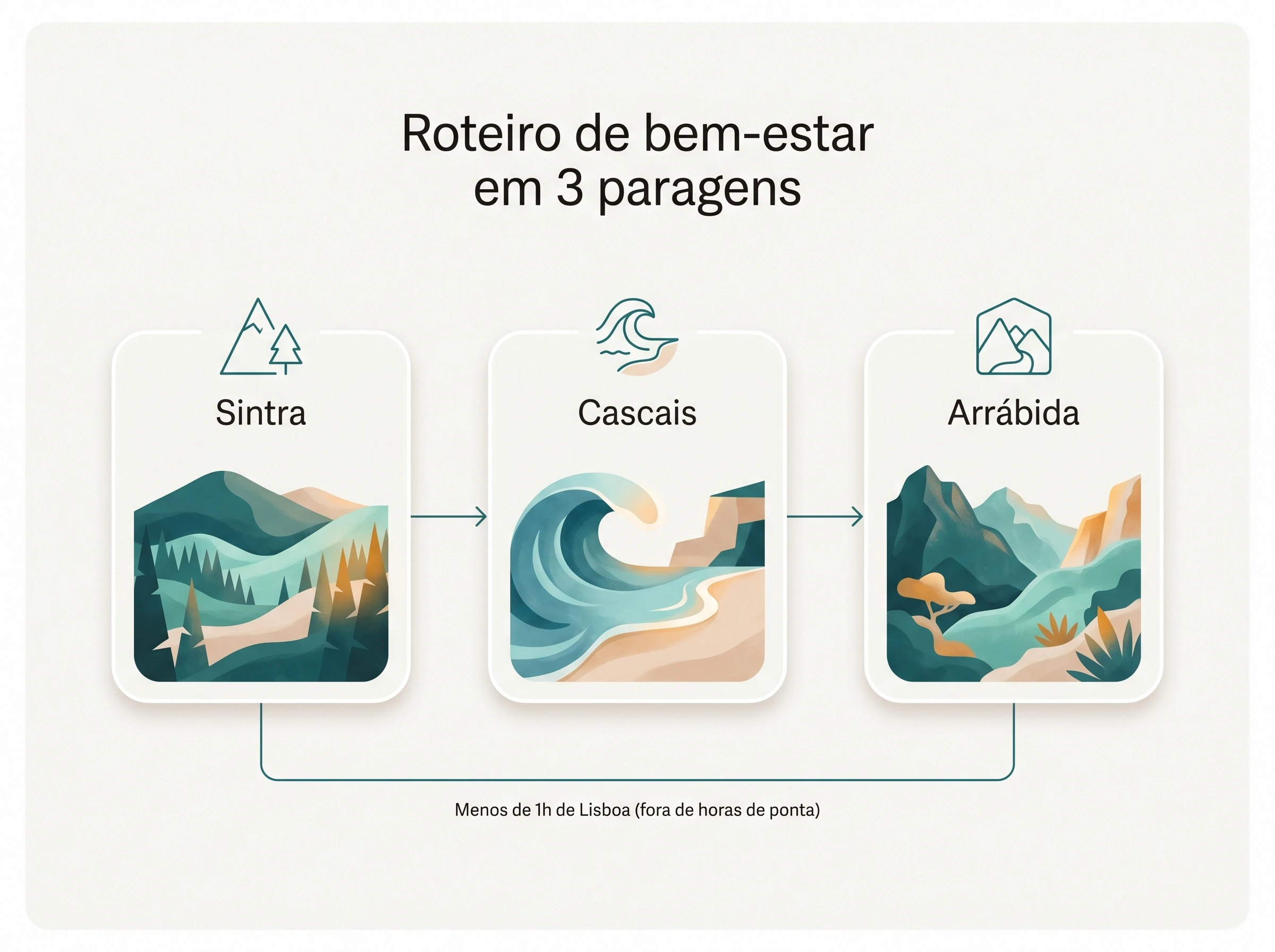
| Leg | Notes |
|---|---|
| Lisbon → Sintra | Fast approaches vs. twisty roads near the historic centre; heavy traffic on weekends. |
| Lisbon → Cascais | IC15 and parallel roads; rush hour clogs exits from the city. |
| Cascais ↔ Sintra | Short in kilometres but winding — distance on the map misleads. |
| Lisbon → Arrábida | Includes crossing the Tagus; time depends on hour and day. |
Practical rule: if the goal is to relax, do not stack more than two axes in a single day.
- Spring and autumn: soft light, mild temperatures, less parking pressure.
- Summer: more daylight and inviting sea, but parking and queues hurt — especially Cascais and Arrábida beaches.
- Winter: fewer crowds; pair indoor spa with short hikes in proper waterproofs.
- Avoid rush hour on the Lisbon ring and bridge approaches heading south.
- In Sintra and Cascais, peripheral car parks or public transport reduce stress in August.
- Use live navigation — historic roads have priorities and regulated parking.
Example A — One-day “hills + sea”: morning walk with clean air in the hills; afternoon massage or thermal circuit further west to finish with side light on the ocean.
Example B — South bank: cross the Tagus early, short Arrábida trail with a view, light lunch, recovery afternoon in a wellbeing space — welcome after climbs.
To go deeper on massage types before booking, see how to choose a massage.
Field sources mention short loops (areas such as Furnas, Portinho de São Pedro, or cliff viewpoints) — always:
- check seasonal closures and ecological restrictions;
- carry water, hat, and proper footwear;
- avoid exposed edges in strong wind.
(Exact trail names and conditions change — confirm on official maps and daily weather.)
- Stay on marked trails, do not pick plants or disturb wildlife.
- No fires or wild camping.
- Respect beach capacity limits where applied — rules may change by season.
- Fines can be stiff; the point is to protect what makes Arrábida special.
Live road information, traffic restrictions, and municipal rules must be checked on official sites (IMT, municipalities, ICNF) on travel day.
- Wellbeing for expats in Lisbon — booking expectations in Greater Lisbon.
- West coast spas — beaches, wind, pacing.
- Sports massage — if you add trail running or cycling.
Informational content. Confirm schedules, access, and regulations before you leave.
Frequently asked questions
In normal conditions (outside rush hour), allow ~30–45 minutes to Sintra or Cascais depending on your start point and route. For Arrábida, cross the Tagus (25 de Abril or Vasco da Gama) and add roughly 30–50 minutes to trailhead areas, depending on the exact destination. GPS often underestimates queues in August and on sunny weekends.