· Updated
Neck and upper-back massage: desk work and remote work around Lisbon
Practical guide to cervical and upper-thoracic massage for screen time, chair posture, and stress: what to ask for, session length, pressure, red flags, and limits versus physiotherapy.
massageneckbackremote workLisbon
People working in front of screens in Lisbon, Cascais, or remotely from the south bank often build neck, shoulder, and upper-back tension — sometimes only noticing when turning the head hurts or the head feels heavy at night. This guide is about massage as comfort (not clinical care).
Editorial infographic
Neck and upper back — editorial illustration.
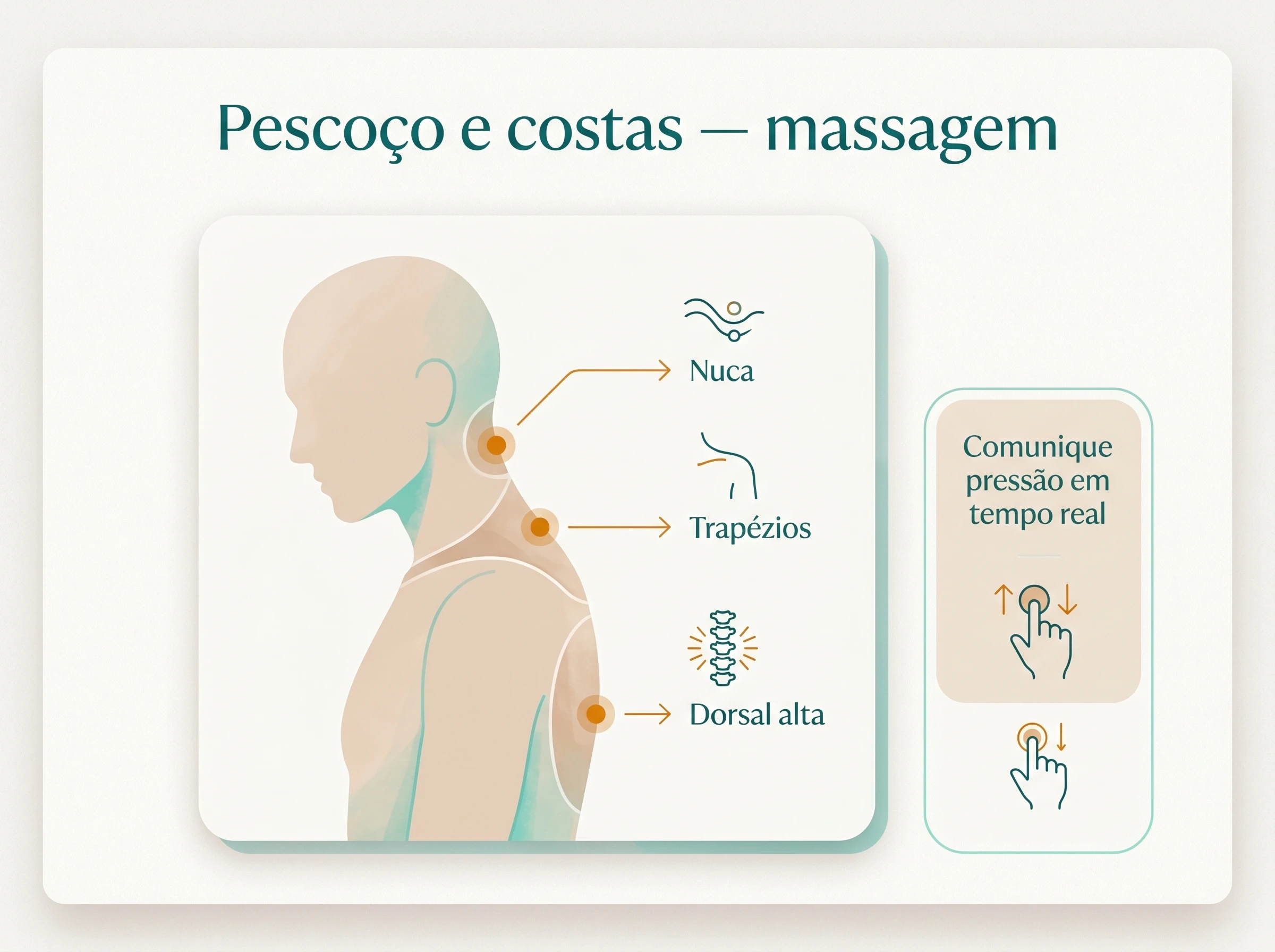
- Clear area: “neck, shoulders, upper back.”
- Intensity: start moderate — the neck tolerates excessive pressure poorly.
- Time: 45–60 minutes if you want forearms included (mouse/keyboard).
Can: reduce muscle discomfort, help downshift the nervous system, improve subjective wellbeing after overload.
Can’t: fix structural posture, treat diagnosed nerve compression, or replace physiotherapy. For boundaries, read wellness vs. physiotherapy.
Speak in real time: “less pressure,” “more time on the right,” “avoid the front of my neck.” A good therapist adjusts — if they don’t, reconsider.
- Chest pain, breathlessness, cold sweat.
- Numbness or tingling that doesn’t clear in the hands.
- Pain after trauma (fall, accident).
- Fever with neck stiffness.
- Types of massage: how to choose
- Massage & remote work on the coast (Cascais–Ericeira) — same screen strain, coastal context
- Complete wellness guide to Lisbon
General information — April 2026. Not medical advice.
Frequently asked questions
Focused work can fit in 30–45 minutes; 60 minutes may add shoulders, upper back, and sometimes upper lumbar — depending on what you book.